
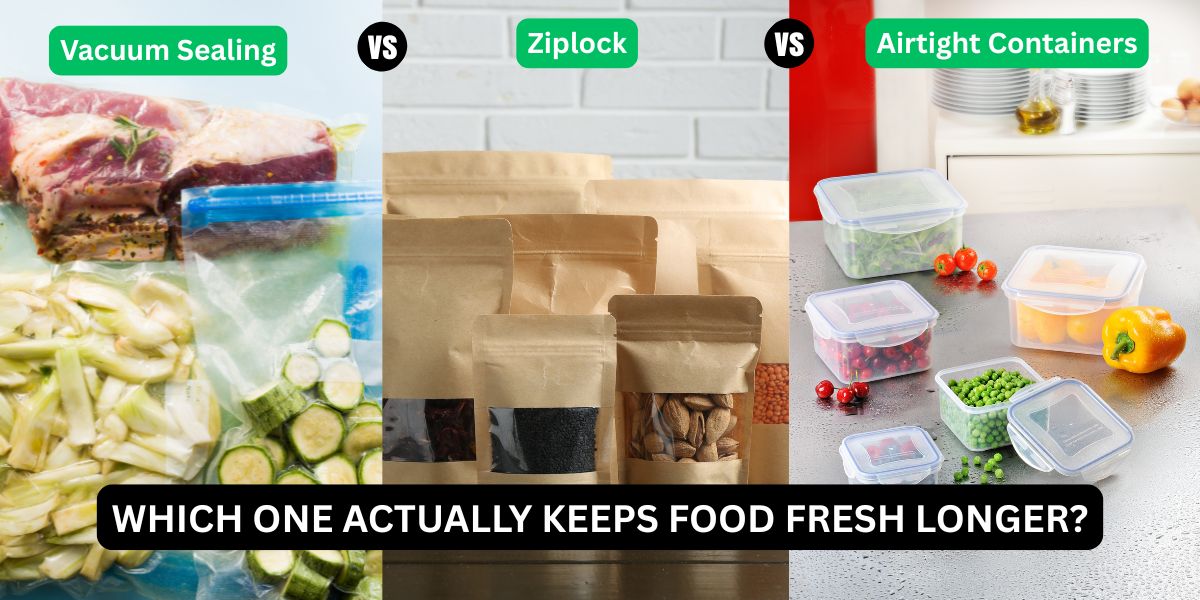
Vacuum Sealing vs Ziplock vs Airtight Containers: Which One Actually Keeps Food Fresh Longer?
Vacuum Sealing vs Ziplock vs Airtight Containers: Which One Actually Keeps Food Fresh Longer?
It Started With a Block of Cheese
You buy a nice block of cheddar on Sunday. You use a little for dinner. Then you wrap the rest and put it back in the fridge.
By Thursday, it’s dry on the edges. Maybe a little moldy.
You paid good money for that cheese. And now half of it is going in the trash.
This happens to almost every American household. In fact, the USDA estimates that the typical family of four wastes 15% of their food, which translates to an average of about $1,500 a year, all due to poor storage practices. (Source)
The good news? The right storage method can fix this. But which one actually works best?
Today, we will break down the three most popular options in US vacuum seal zipper lock and airtight containers.
Why Food Goes Bad in the First Place
Before we compare the storage methods, let’s understand why food goes bad so quickly in the first place.
Food spoils because of two main culprits:
- Oxygen—Exposure to oxygen causes fats and nutrients to break down, making food stale or rancid. This process, called oxidation, is one of the main reasons food loses freshness.
- Too much moisture – Too much moisture can quickly lead to bacteria and mold growth – but remember, not all bacteria are bad for food!
The goal of any food storage system is simple: minimize both of these as much as possible.
Here’s how each method helps keep food fresh longer.
H2: Method 1: Vacuum Sealing
How It Works
A vacuum sealer removes almost all the air from a specially designed bag. Then it heat-seals the bag shut. Almost all the air is removed, which helps keep outside air from getting back in.
Vacuum seal bags drastically reduce the chance of oxidation, moisture loss, and bacterial growth.
What It’s Good For
Vacuum sealing works best for:
- Raw meats and seafood
- Cheese and deli items
- Dry goods like nuts, grains, and coffee
- Meal prep and batch cooking
- Sous vide cooking (needs an airtight seal)
- Freezer storage (helps protect food from freezer burn)
How Long Does It Keep Food Fresh
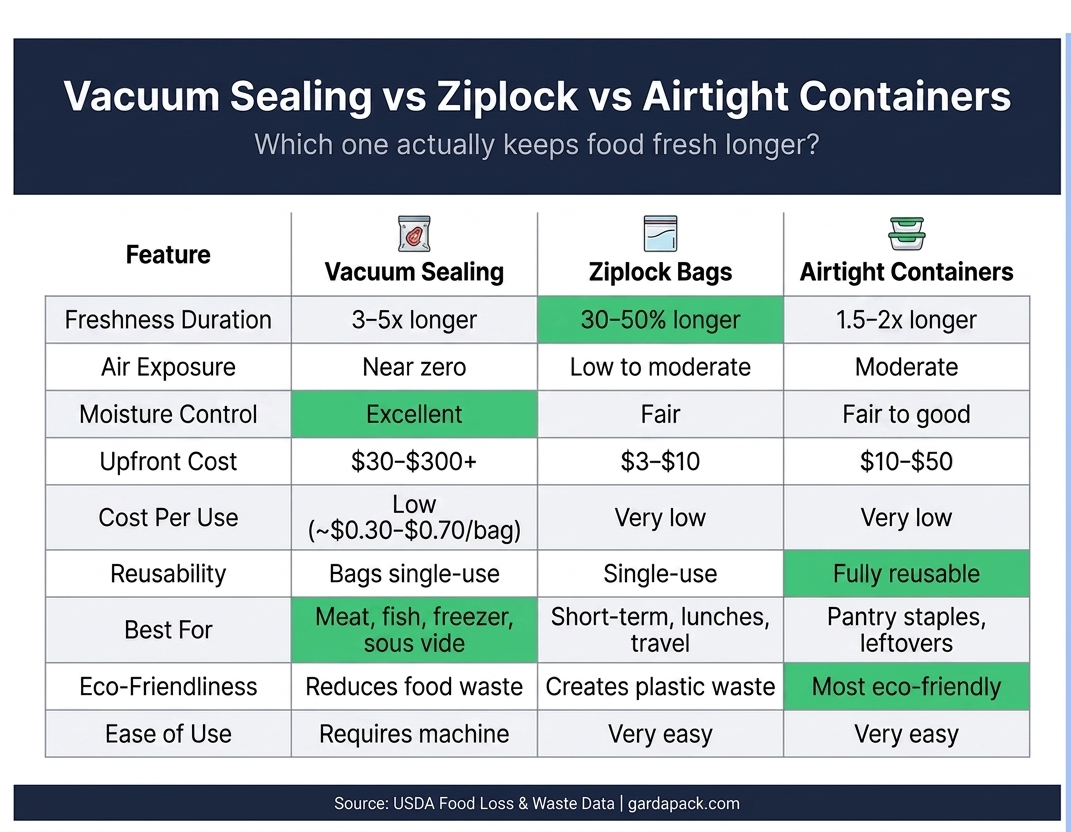
In many cases, vacuum sealing can keep food fresh three to five times longer than regular storage methods. Beef sealed in a vacuum bag can last 2–3 years, compared to just 6 months in a regular bag.
The Downsides
- You need a machine (upfront cost)
- The bags are single-use in most home setups
- Not ideal for soft or delicate foods like chips, berries, or bread
- Some vegetables (like garlic and onions) emit gases that break the seal over time
Method 2: Ziplock Bags
How They Work
Ziplock bags create a seal by pressing the top closure together. Some bags now come with a valve and hand pump that removes most of the air — a step up from standard bags.
What They’re Good For
Ziplock bags are great for:
- Short-term food storage (1–5 days)
- Packing lunches or snacks
- Storing leftovers in the fridge
- Marinating food quickly
- Travel and on-the-go use
How Long Can They Keep Food Fresh
Standard Ziplock bags let in small amounts of air over time. Even with a tight seal, air seeps in. Food typically lasts 30–50% longer than leaving food uncovered—but not nearly as long as vacuum sealing.
Ziplock vacuum bags (those that have a hand pump) perform better. However, they still can’t match the level of preservation a full vacuum sealer delivers.
The Downsides
- Air re-enters the bag over time
- Not fully airtight — bag seals can fail
- Contributes to single-use plastic waste
- Not ideal for long-term storage or the freezer
Method 3: Airtight Containers
How They Work
Airtight containers have a rubber or silicone gasket around the lid to form a seal when closed. Some have a locking clip to hold the seal tight.
They do not remove air. They simply limit how much outside air gets in.
What They’re Good For
Airtight containers are best for:
- Dry pantry goods (flour, sugar, pasta, cereal)
- Leftovers in the fridge (1–4 days)
- Cut fruits and vegetables
- Snacks and baked goods
- Foods you need to access repeatedly
How Long Can They Keep Food Fresh
Airtight containers work better than open bowls or loosely covered containers. However, since they trap air in them, they are not as effective as vacuum sealing. Food usually stays fresh longer than in an ordinary container.
The Downsides
- Air is trapped inside with the food from the start
- Moisture can build up inside, leading to mold
- Takes up more cabinet and fridge space than bags
- Not ideal for long-term freezer use (no real barrier to freezer burn)
Read our latest article on “How high-barrier vacuum packaging extends shelf life with low OTR technology.”
The Head-to-Head Comparison Table
Which One Should You Choose?
The honest answer is that it depends on how and where you store food.
Here is a simple way to decide:
Choose vacuum sealing if you:
- Buy meat or seafood in bulk
- Meal prep in large batches
- Want to prevent freezer burn
- If You’re serious about cutting food waste long-term
- Cook sous vide
Choose Ziplock bags if you:
- Need quick, everyday storage
- Pack lunches or snacks
- Want low-cost, no-hassle storage
- Store food for 1–5 days only
Choose airtight containers if you:
- Want to store dry pantry goods
- Need something reusable and plastic-free
- Store leftovers for a day or two
- Want something easy to clean and access daily
For most households, the best approach is to use all three based on the condition. Vacuum seal protein, long-term goods. Use Ziplock for daily needs. Store dry goods and leftovers in containers.
Where GardaPack Fits In
When you’re ready to start vacuum sealing, the bags become just as important as the machine
GardaPack is a company that specializes in vacuum packaging, producing professional-level vacuum seal bags designed for reliable performance.
- Oxygen barrier technology – a multi-layer structure that prevents oxygen at the molecular level, not only at the surface.
- Moisture control—designed to keep the right amount of moisture inside the bag within the bag.
- Heavy-duty construction—puncture-proof, tear-proof, and leak-proof even in the freezer
- Food-safe, BPA-free materials – No harmful chemicals coming into contact with your food.
GardaPack offers a wide range of bag sizes and types, including prime bags, heavy-duty bags, chamber vacuum bags, and mylar bags for long-term storage.
They also have a vacuum seal roll to allow you to cut your own sizes to fit oddly shaped foods.
The real difference comes down to bag quality — cheap bags let oxygen through the material itself, even when sealed. GardaPack’s high-barrier construction stops that from happening.
For home cooks who want professional results, it’s an easy upgrade worth making.
The Bottom Line
Food storage isn’t complicated, but the method you choose makes a real difference.
Ziplock bags are fine for today. Airtight containers are great for the pantry. But if you want food to last weeks and months — not days — vacuum sealing is the clear choice for you.
Start with what you can afford and work with. Switching out the bulk proteins you purchase (for vacuum-packed bags!) can save your family thousands of dollars in food waste every year.
Your food is worth protecting. And now you know exactly how to do it.
